Storm Shelter Dallas-Fort Worth, TX: Underground Concrete Delivered 2026
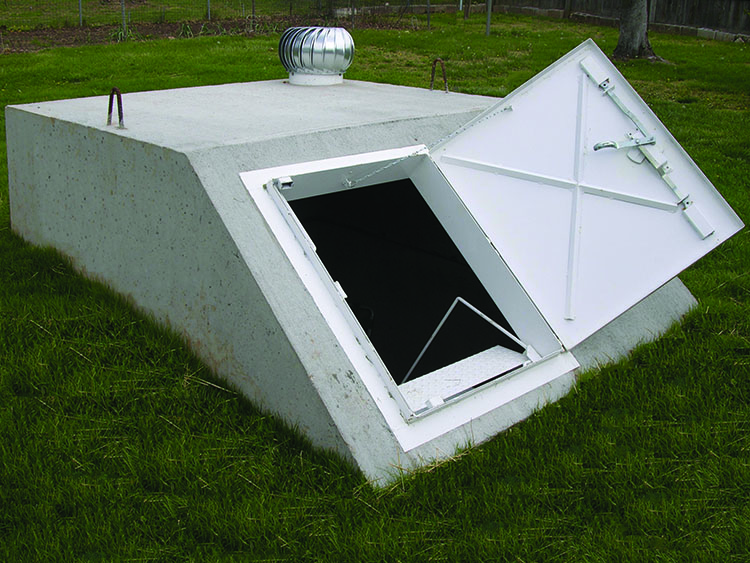
Underground concrete storm shelters delivered to Dallas-Fort Worth starting at $4,250. DFW sits in the most rapidly expanding tornado risk corridor in the US. EF5-rated. 1-week delivery.
The Dallas-Fort Worth metro — home to 7+ million people — sits in what climatologists call the New Tornado Alley, a band of high tornado risk extending from North Texas through East Texas and into the Southeast. Over the past decade, DFW has experienced a measurable increase in tornado frequency, including direct hits on populated suburbs like Garland, Rowlett, and Mesquite.
DFW Tornado Risk: More Than People Realize
Texas tornado statistics are dominated by the panhandle and rural West Texas. But the DFW metro's explosion in population and suburban development has put millions of people in high-risk corridors that were mostly empty land 30 years ago. The December 2015 tornado outbreak — which included an EF4 that tore through Garland and Rowlett, killing 11 people — was a wake-up call. Those were populated suburban neighborhoods, not rural fields.
NOAA data shows the DFW metro receives an average of 10-15 significant tornado warnings per year. The tornado season is different than OKC — DFW sees elevated risk in both spring (April-May) and late fall (November-December), giving homeowners two active seasons to prepare for instead of one.
Shelter Specs and Pricing for Dallas-Fort Worth
| Spec | Details |
|---|---|
| Base Price (DFW) | Starting at $4,250 + delivery |
| Construction | 5,000 PSI precast concrete monolith |
| Wind rating | EF5 — rated for 250+ MPH winds |
| Certification | FEMA 320 / ICC 500 compliant |
| Delivery timeline | ~1 week (shipped from Grandview, MO) |
| Warranty | 10-year structural warranty |
Note on DFW delivery pricing: DFW is approximately 450-500 miles from our Grandview, MO facility. Use the instant quote tool with your specific zip code for an exact delivered price. Shipping typically adds $1,200-1,600 for DFW metro addresses.
Texas Soil Considerations: Black Clay
North Texas is notorious for expansive black clay (Vertisols), which shrinks and swells dramatically with moisture changes. This can affect underground structures if installation is not done correctly. Key requirements for DFW shelter installations:
- Proper backfill material — use crushed gravel or select fill, not native clay, around the shelter to prevent lateral pressure from expansion
- Drainage — install a drain sump or gravel drainage layer below the shelter to prevent water accumulation in expansive soil
- Experienced contractor — use a DFW excavation company familiar with Vertisol soil conditions (most are — it is standard Texas excavation knowledge)
Done correctly, a concrete shelter in DFW clay soil is extremely stable and long-lasting. The clay actually provides excellent compression support. Total installation in DFW typically runs $1,000-1,800 due to the soil work required — higher than OKC but well within normal range.
DFW Suburbs With Highest Tornado Risk
These DFW communities have seen significant tornado activity in the past 15 years: Garland, Rowlett, Mesquite, Lancaster, Glenn Heights, Cedar Hill, Mansfield, Arlington (SW side), Irving, Grand Prairie, Forney, Terrell, Greenville. If you live in or near any of these communities, your risk profile is above the DFW metro average.
Texas Does Not Require Shelters in New Construction
Unlike Oklahoma (which mandated shelters in schools after 2013), Texas does not require storm shelters in residential construction. This means the vast majority of suburban DFW homes built in the last 20 years have no shelter infrastructure at all. In a fast-moving EF2+ tornado, the options are: leave early (requires 30+ minute warning), go to a neighbor's shelter, or get in an interior room and hope. None of those is acceptable when a concrete shelter can be in your backyard in a week.
Get your Dallas-Fort Worth shelter price
EF5-rated precast concrete. $4,250 base + delivery. In-stock. 1-week.
Get my DFW price in 60 seconds →— Kay, Founder of Home Defend Pro
We sell EF5-rated underground concrete storm shelters delivered to your driveway starting at $4,250. 1-week delivery. 10-year structural warranty. Get an instant quote →
Frequently Asked Questions
How much does a storm shelter cost in Dallas-Fort Worth?
Our underground concrete shelter starts at $4,250 plus delivery to DFW (typically $1,200-1,600 for DFW metro addresses from our Grandview, MO facility). Installation adds $1,000-1,800 in North Texas due to expansive clay soil. Total installed cost: approximately $6,500-7,600.
Does Dallas-Fort Worth get tornadoes?
Yes. DFW experiences 10-15 significant tornado warnings per year, with two active seasons (April-May and November-December). Notable events include the December 2015 EF4 that hit Garland and Rowlett, killing 11 people, and multiple EF2-EF3 events striking populated suburbs in the past decade.
What is the problem with installing a shelter in Texas black clay?
Expansive black clay (Vertisol soil common in DFW) shrinks and swells with moisture, which can exert lateral pressure on underground structures. The solution is using crushed gravel backfill and proper drainage rather than native clay. An experienced DFW excavation contractor handles this routinely.
Does Texas require storm shelters in homes?
No. Texas does not mandate storm shelters in residential construction. Unlike Oklahoma (which required shelters in all new schools after 2013), most suburban DFW homes built in the last 20 years have no shelter at all. This makes a personal underground shelter especially valuable in the DFW market.
How long does delivery take to Dallas-Fort Worth?
Approximately 1 week from our Grandview, MO facility. We ship on flatbed truck to your address. You will need to arrange excavation and placement separately — most DFW excavation companies are familiar with concrete shelter installation.
What DFW suburbs are at highest tornado risk?
Based on historical tornado tracks, the highest-risk DFW suburbs include: Garland, Rowlett, Mesquite, Lancaster, Glenn Heights, Cedar Hill, Mansfield, Arlington (SW), Irving, Grand Prairie, Forney, and Terrell. These communities have seen significant tornado activity in the last 15 years.